

Classical Mediterranean and Middle East
Travel through time with us
The Classical Mediterranean and Middle East (CMME) program connects the past to the present in ways that might surprise you. When you study the ancient world, you’re really studying how humans have argued, dreamed, loved, and led for thousands of years.
Where Past Meets Present
Classical languages are not just relics of the past: Latin and Biblical Hebrew continue to shape liturgy and religious life today, while Arabic, studied in its classical and modern forms, remains a living, global language used in diplomacy, media, literature, and everyday communication across more than twenty countries. In our department, the ancient and the modern speak to one another.
And you sharpen skills that matter everywhere: arguing a case, writing with precision, learning languages, working in teams. Recent grads have earned Fulbright grants, pursued medical and law degrees, and landed at places like the World Bank, Brookings Institution, and the Smithsonian.

The Mediterranean is our classroom
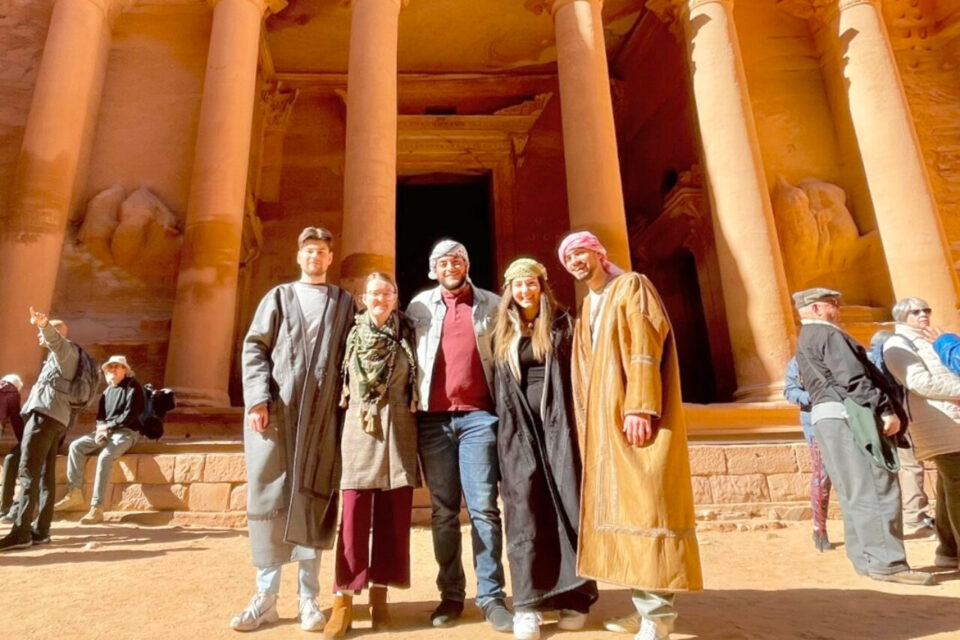
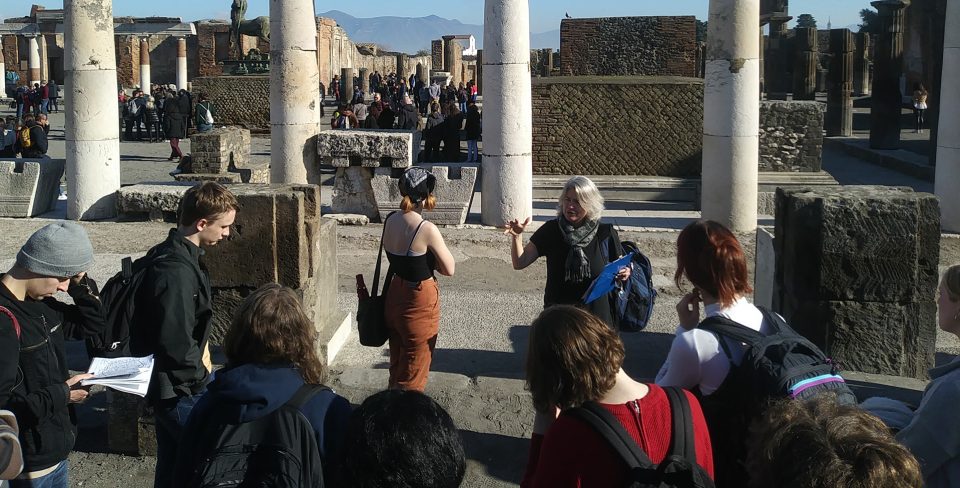
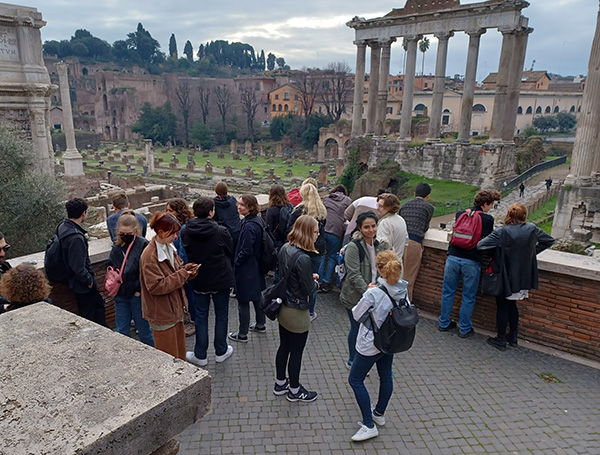
Our idea of “fieldwork” isn’t sitting in a library. It’s standing among ruins in Greece, exploring mosaics in Morocco, or excavating archaeological sites in Israel. (Though we do love a good library.)
Closer to home? Analyze ancient art at the Minneapolis Institute of Art, dive into manuscripts at the Hill Museum & Manuscript Library, or attend plays and cultural events in the Twin Cities.
Languages that open worlds
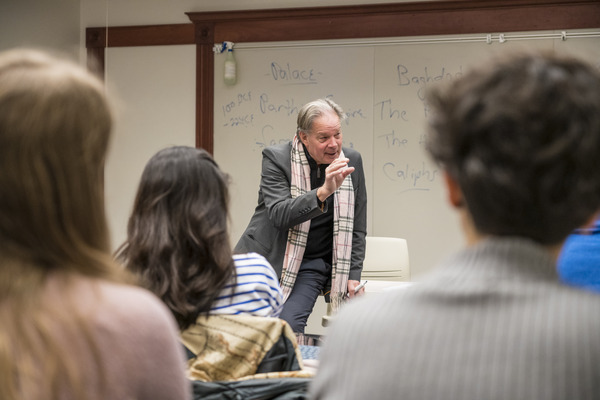
Some programs focus on Greek and Latin. We go further. At Mac, you can also study Hebrew and Arabic. You can explore ancient and modern culture, art, religion, and history through these four languages. Read the Bible, Homer’s epics, and works by Virgil and Plato in their original languages. Discover how the language of the Qur’an informs Arabic culture and literature of today’s world.
Language is the gateway. Culture, art, religion, and history? That’s what you’ll explore once you step through.
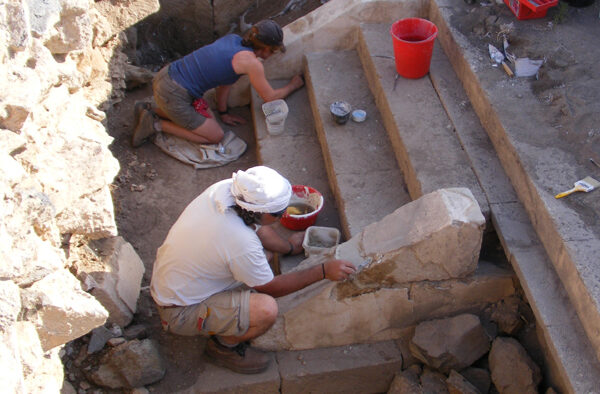
Archaeology in Action
Archaeology is another hallmark of our program. We excavate with our students all over the world, in such places as Ukraine, Greece, Israel, and Turkey. You’ll use cutting-edge technology in archaeology: flying drones to map sites, 3D printing replicas of artifacts, and visualizing excavation in the digital age. We offer funded summer research opportunities.
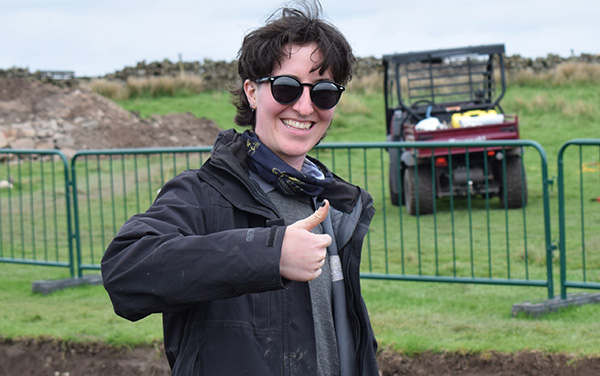
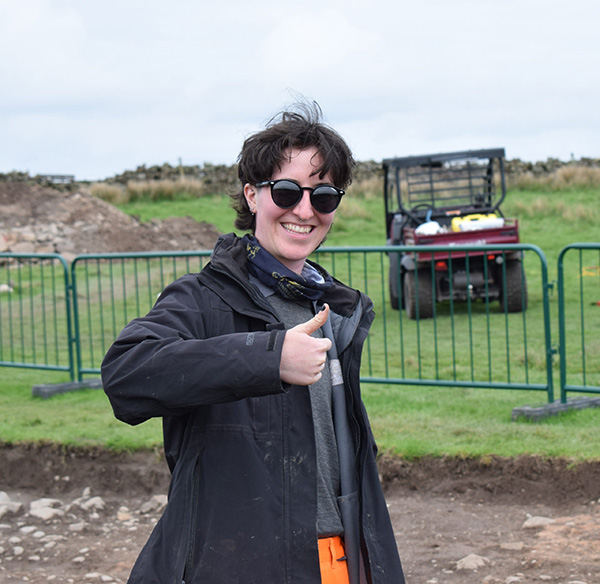
Archaeology is very much a mix between the humanities and sciences, which I think is really nice. The variety of classes at Mac made so many things possible for me.Franki Gillis ’20 Geoarcheologist at Vindolanda Trust, classical Mediterranean and Middle East major and geology minor

Classical Mediterranean and Middle East in the Cities
55
Museums in the metro area, including class visits and projects with the Minneapolis Institute of Art

Field trips to examine ancient manuscripts, see Greek plays or Latin comedies, visit mosques, or attend the Twin Cities Arab Film Festival
Students intern at museums, historical societies, Nova Classical Academy, The Advocates for Human Rights, and the MN Council of Nonprofits
Join our community
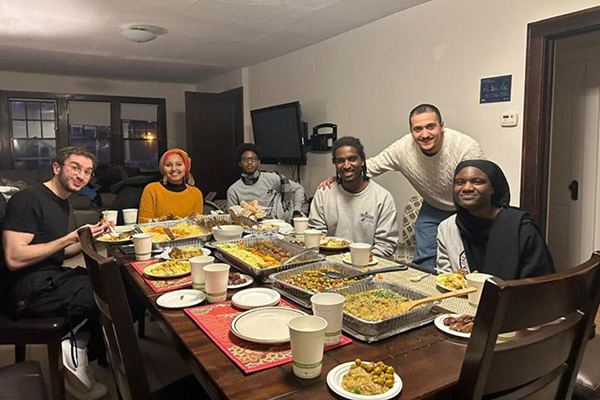
- Live the language. Apply to the Arabic House to immerse yourself in Arabic and live with fellow language lovers. Not living there? Join the weekly events and lunches. Everyone’s welcome to hang out and practice their conversational Arabic.
- Cookie party, anyone? End your semester the sweet way by decorating cookies with your classmates and professors. The Classics Cookie Party has been a tradition for over 20 years.
- Try it out! Sample a language course, the sweeping Classics 101, or Intro to Archaeology.
Are you a future CMME major at Mac?
If you’re considering Mac, let us know. We’ll keep you up to date on application deadlines and visit opportunities.